
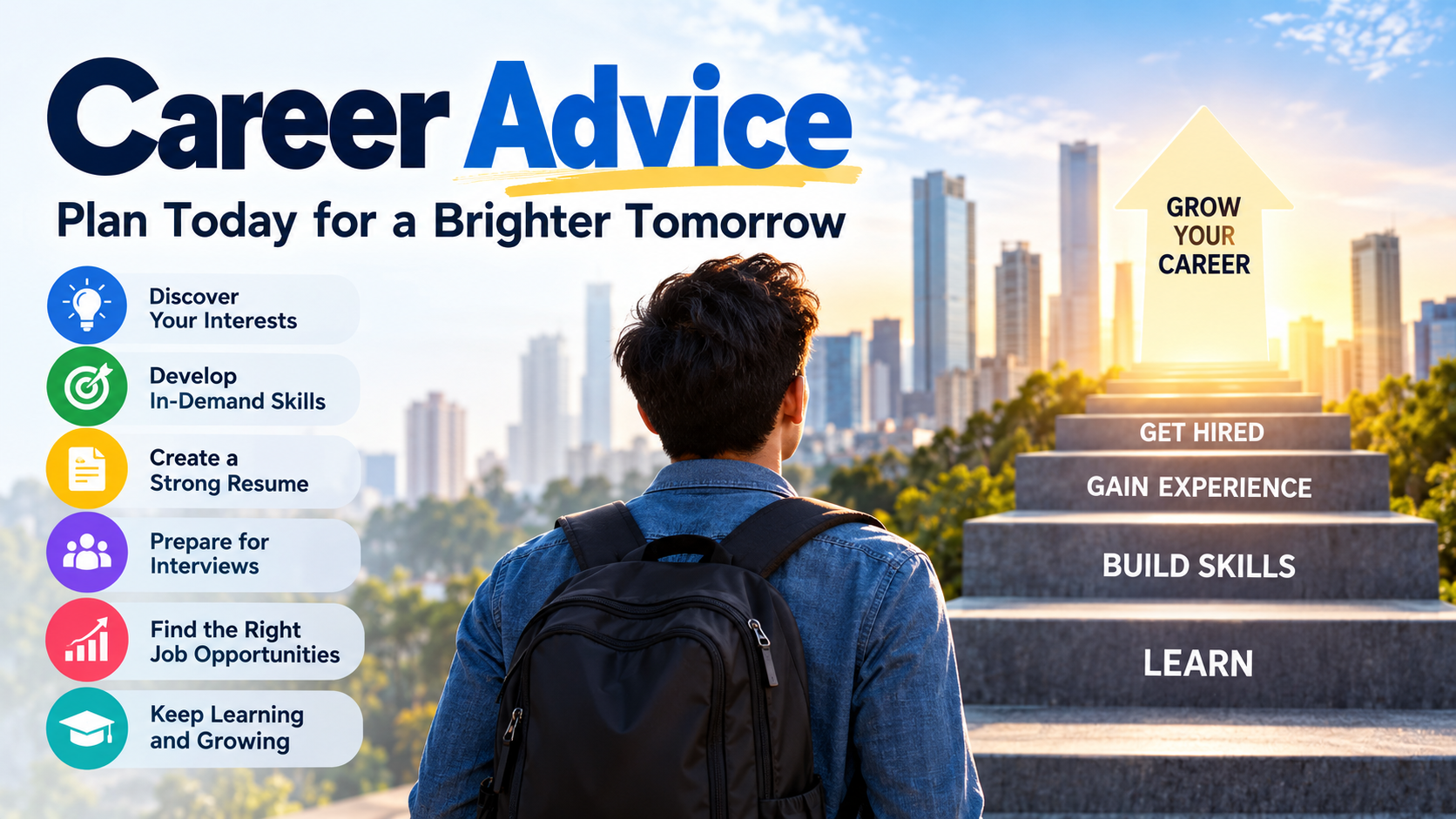
Career Advice: How to Build a Successful Career in 2026
Choosing the right career is one of the most important decisions in life. Whether you are a student, fresher, job seeker, or working professional, the right career advice can help you make better decisions and achieve your professional goals.
In today's competitive job market, having a degree is not always enough. Employers also look for practical skills, communication abilities, relevant experience, and a willingness to learn. With the right planning and consistent effort, you can build a successful career and find better job opportunities.
1. Identify Your Skills and Interests
The first step toward building a successful career is understanding your strengths, interests, and abilities. Think about the subjects you enjoy, the tasks you perform well, and the type of work that motivates you.
For example, if you enjoy solving technical problems, you might explore careers in IT, software development, or cybersecurity. If you enjoy helping others learn, teaching could be a suitable career option.
Choose a career that matches your interests while also offering opportunities for professional growth.
2. Set Clear Career Goals
Setting clear career goals helps you stay focused and motivated. Decide what you want to achieve in the short term and the long term.
Your short-term goals might include learning a new skill, completing a certification, or finding your first job. Long-term goals could include becoming a team leader, starting a business, or developing expertise in a particular field.
Break your goals into smaller steps and review your progress regularly.
3. Develop In-Demand Skills
The job market continues to change as technology and business requirements evolve. Developing relevant skills can improve your employability and help you stand out from other candidates.
Some valuable skills to consider in 2026 include:
Digital marketing and search engine optimization (SEO)
Artificial intelligence (AI) and data analysis
Programming and software development
Communication and presentation
Problem-solving and critical thinking
Project management and teamwork
Choose skills that match your target industry and practice them through real projects, internships, or online courses.
4. Create a Professional Resume
Your resume is often the first impression you make on a potential employer. A well-organized resume should clearly highlight your education, skills, work experience, certifications, and achievements.
If you are a fresher, focus on your academic projects, internships, technical skills, and relevant training. If you already have work experience, emphasize your responsibilities and measurable achievements.
Keep your resume clear, accurate, and tailored to the job you are applying for.
5. Prepare for Job Interviews
Interview preparation can increase your confidence and help you communicate your abilities effectively.
Before attending an interview, research the company, understand the job description, and practice answering common interview questions. Be prepared to explain your skills, experience, strengths, and career goals.
During the interview, listen carefully, answer honestly, and provide examples whenever possible. Good communication and a positive attitude can make a strong impression.
6. Build Your Professional Network
Networking can help you discover job openings, learn about different industries, and connect with experienced professionals.
You can build your network by attending industry events, joining professional communities, connecting with recruiters, and maintaining a professional LinkedIn profile.
Do not hesitate to ask experienced people for career guidance. Learning from their experiences can help you avoid common mistakes and make informed career decisions.
7. Find the Right Job Opportunities
Finding a suitable job requires more than submitting applications. Search for vacancies that match your qualifications, interests, experience, and career goals.
Use trusted job portals, company career pages, and professional networks to discover relevant openings. Read job descriptions carefully and customize your resume for each position.
CSI Jobs can help job seekers explore career opportunities and take the next step toward their professional goals. Visit csijobs.in to discover job opportunities and stay informed about career-related resources.
8. Keep Learning and Improving
Career development does not stop after getting a job. Successful professionals continue learning, improving their skills, and adapting to new challenges.
Attend workshops, complete relevant certifications, follow industry developments, and ask for constructive feedback. Continuous learning can help you remain competitive and prepare for future opportunities.
Remember that career growth takes time. Be patient, stay consistent, and treat challenges as opportunities to learn.
Common Career Mistakes to Avoid
While planning your career, try to avoid these common mistakes:
Choosing a career only because of salary or social pressure.
Applying for jobs without reading the requirements.
Ignoring communication and interpersonal skills.
Using the same resume for every job application.
Stopping learning after completing your education.
Giving up after facing rejection.
Every rejection can provide an opportunity to improve your skills, application strategy, and interview performance.
Conclusion
Building a successful career requires planning, continuous learning, practical experience, and determination. Start by understanding your strengths, setting achievable goals, developing relevant skills, and searching for suitable job opportunities.
Whether you are a fresher looking for your first job or an experienced professional seeking career growth, taking small and consistent steps can make a meaningful difference.
Ready to take the next step in your career? Visit CSI Jobs at csijobs.in to explore opportunities and move closer to your professional goals.